Get to grips with Steam In Place and learn how to avoid temperature errors and repetition in sterile processes. See how an SSC can make the difference.
SIP: Avoid errors and achieve stable sterility in pharma and food
SIP - how to avoid validation errors and ensure sterility
Steam In Place (SIP) is essential for sterile processes in pharma and food production. But what happens when the temperature isn't right - and how do you avoid having to repeat the process?
What is SIP - and why is it important?
When producing food or medicine, the facility must be completely clean - not just clean to look at, but free from any kind of microbiological activity. This is where SIP (Steam in Place) comes in.
SIP is a process where pure steam sterilises the entire system. This happens after CIP cleaning and before the next batch. The goal? To ensure that every drop running through the system has a sterile environment all the way.
Why do SIP processes fail?
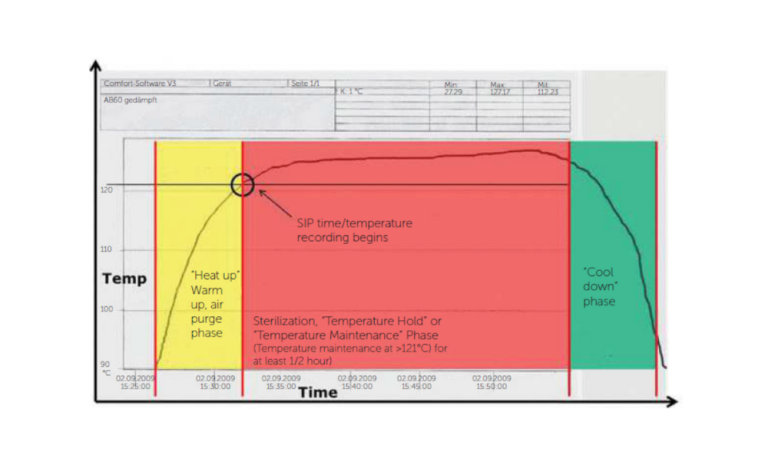
For the SIP process to be approved, the temperature must be documented. The system must maintain at least 121°C for 30 minutes - without interruption. If the temperature falls below the limit, it is registered as a validation failure and SIP must be restarted.
Three typical causes of temperature validation errors
It's almost always condensate that interferes with the temperature sensor:
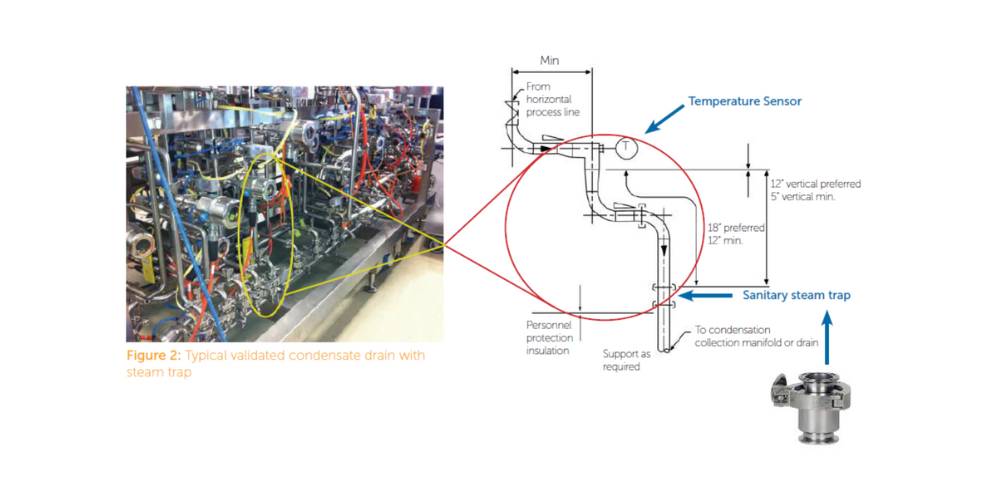
- If there is not enough space between sensor and water discharger
- If a faulty water discharger lets steam through
- If multiple water dischargers share the same condensate system
... the condensate can collect and cool down the sensor - and then the validation fails.
What can you do?
Fortunately, there are several solutions:
- Use water dischargers with low subcooling
- Ensure 300-450 mm between sensor and water discharger
- Replace faulty components quickly
- Design the condensate system with capacity for peak loads
When there is no space - do this
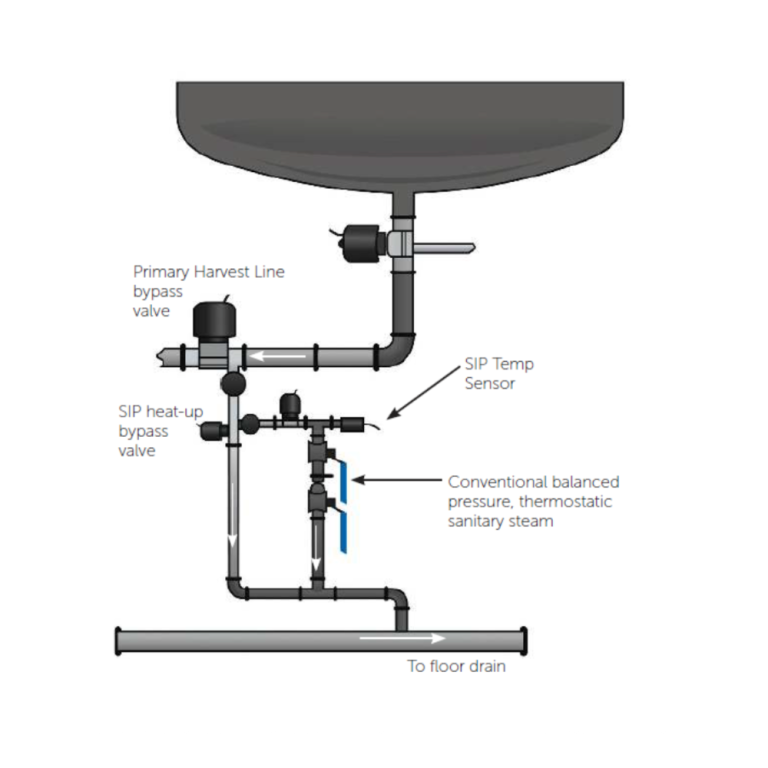
In many installations - especially under tanks - there is no room for the ideal pipe run. Here there are two ways forward:
- Utilise horizontal space: Even short, slightly inclined horizontal pipes can form a buffer that protects the sensor.
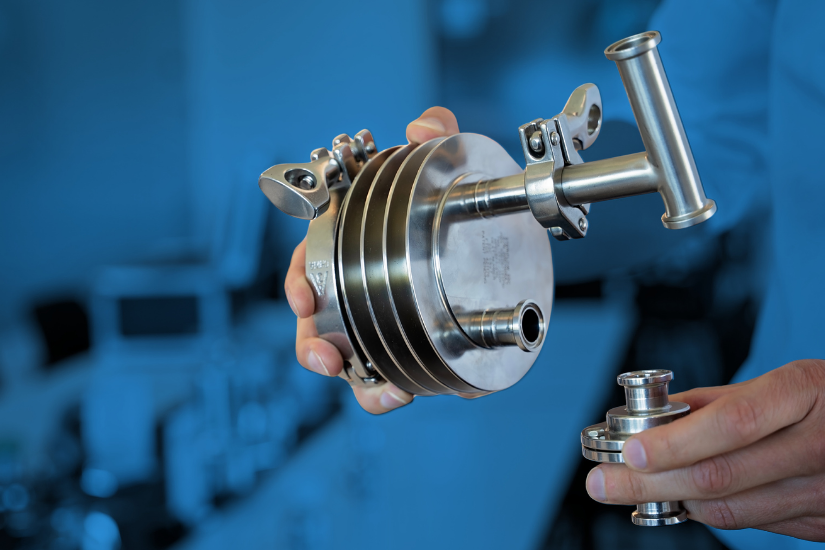
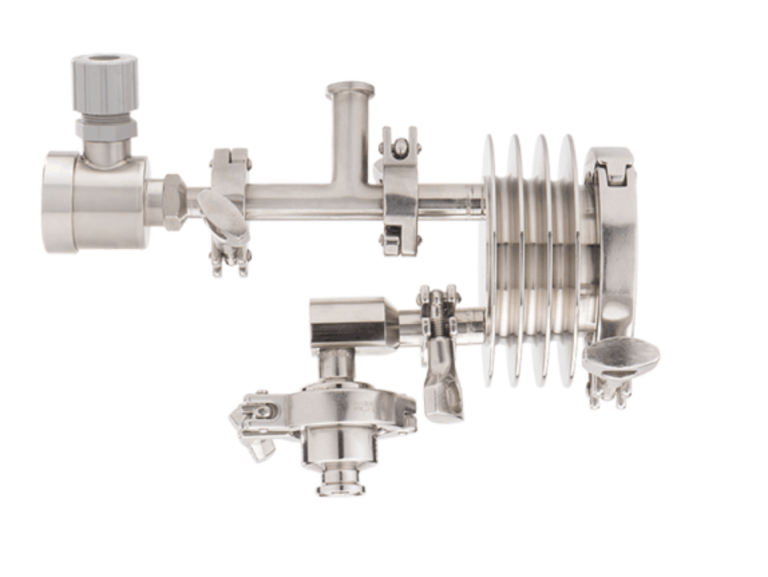
- Install a sanitary condenser: This is where the SSC - the sanitary condenser - comes in.
How a sanitary condenser (SSC) works
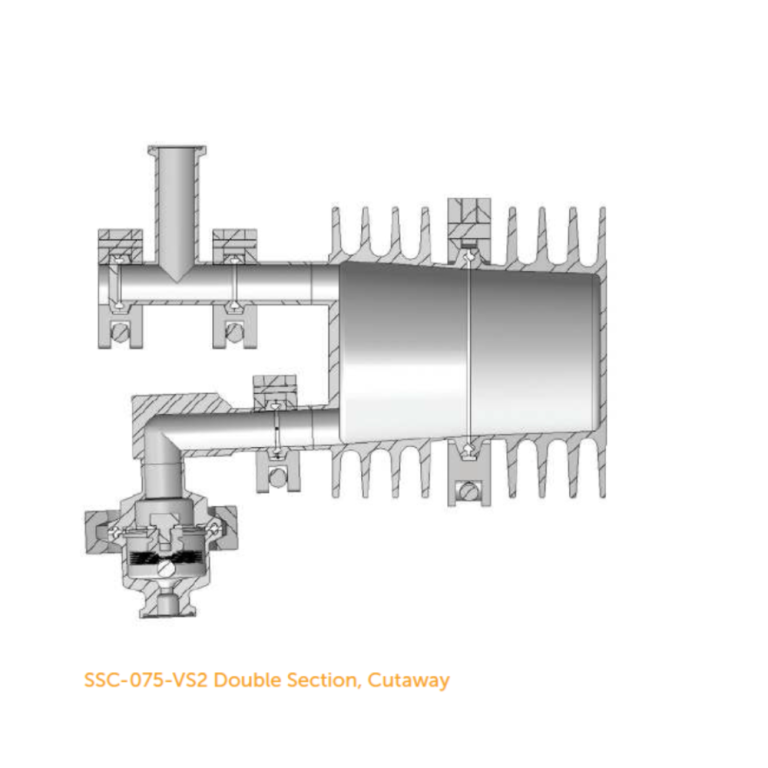
SSC collects and cools the condensate before it reaches the water discharger - and that makes a world of difference.
The benefits in practice:
- Eliminates the risk of validation errors
- Shortens heating time
- Requires minimal space
The SSC has cooling fins and a large surface area that effectively extracts heat from the condensate - so the steam bellows work as it should. And you can get validation the first time, every time.
Ready to optimise your SIP process?