
Electropolishing
Steel tanks in pharma environments
5 min
When surface quality, documentation, and FAT testing provide peace of mind
As Product & Field Service Manager at Alflow, I work daily with FAT tests, documentation, and quality assurance on projects for pharmaceutical production. Here, surface quality is not a cosmetic issue – but about cleanability (which ensures that residual products are removed quickly and effectively, and reduces the risk of cross-contamination) and documented operational reliability.
When steel tanks and process equipment are to be used in environments with high demands for hygiene, traceability, and compliance, the choice of surface treatment becomes a critical parameter. Electropolishing plays a central role here – not as a finish, but as a controlled and documented process that reduces risk in the overall production.
Surface quality is critical in regulated environments because it ensures: * **Sterility and Cleanliness:** In pharmaceutical, medical, and food industries, smooth, non-porous surfaces are essential for preventing the growth of bacteria, mould, and other microorganisms. Rough surfaces can trap particles and contaminants that are difficult to clean and sterilise, increasing the risk of product contamination and patient harm. * **Corrosion Resistance:** Regulated environments often involve exposure to harsh chemicals, cleaning agents, and sterilising processes. A high-quality surface finish, often achieved through passivation or electropolishing, enhances a material's resistance to corrosion, preventing material degradation and potential leaching of harmful substances into the product. * **Biocompatibility:** For medical devices, implants, and drug delivery systems, the surface that comes into contact with the body must be biocompatible. Smooth, defect-free surfaces minimise the risk of inflammatory responses, blood clotting, and tissue rejection. * **Process Efficiency and Validation:** In manufacturing, consistent and predictable surface properties are vital for process repeatability and validation. Smooth surfaces can facilitate easier material flow, reduce friction, and prevent product adhesion, contributing to more efficient production and simpler validation of cleaning and sterilisation procedures. * **Regulatory Compliance:** Regulatory bodies (like the FDA, EMA, etc.) have strict guidelines regarding the materials and finishes used in products intended for human use or consumption. Meeting these standards, which often dictate specific surface roughness (Ra values) and material properties, is a fundamental requirement for market approval and continued operation. * **Product Integrity and Performance:** In many applications, the surface finish directly impacts the performance and longevity of the product. For instance, in laboratory equipment or analytical instruments, precise surface finishes are needed for accurate measurements and to prevent sample degradation.
In pharmaceutical production, there are increased demands. An electropolished surface helps with the following:
- Ensuring better cleanability (CIP/SIP)
- Minimising the risk of contamination
- Uniform and documented surfaces
- Reproducible quality across components and thoughts
- Ensuring a uniform cavity, which guarantees uniform cleaning
Even small irregularities, weld seams or microscopic pores can act as collection points for product residues or microorganisms. This affects cleaning validation, operation and – ultimately – patient safety. Therefore, surface treatment is not just about appearance – but about process control and risk minimisation.
What is electropolishing – seen from a technical perspective?
Electropolishing is an electrolytic process where the surface of stainless steel is smoothed at a microscopic level. Unlike mechanical polishing, material is selectively removed from the peaks of the surface, resulting in:
- a smoother and more uniform surface
- Reduced surface roughness (Ra)
- removal of embedded impurities
- improved passivation of the steel
Image: Before/after electropolishing of a steel surface. The many small "peaks" are removed, resulting in a smoother surface where the risk of impurity build-up is significantly minimised.
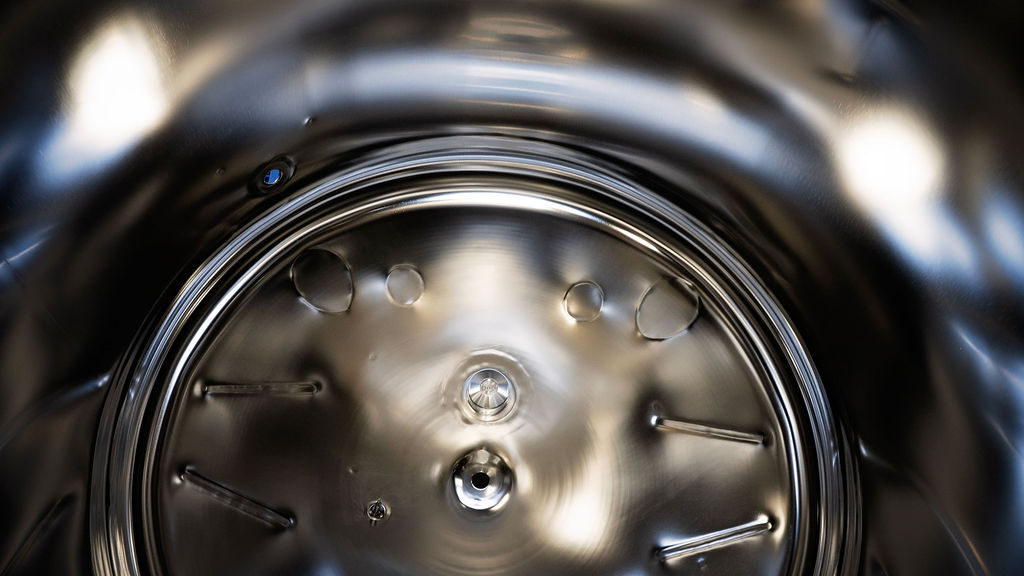
Electropolishing typically results in a significant reduction in the Ra value, which directly impacts cleanability and validation. At the same time, the process is also well-suited to complex geometries and internal surfaces where mechanical processing often has limitations. This makes electropolishing particularly relevant for tanks and equipment involved in high-quality processes.
Before and after: What can be seen and documented
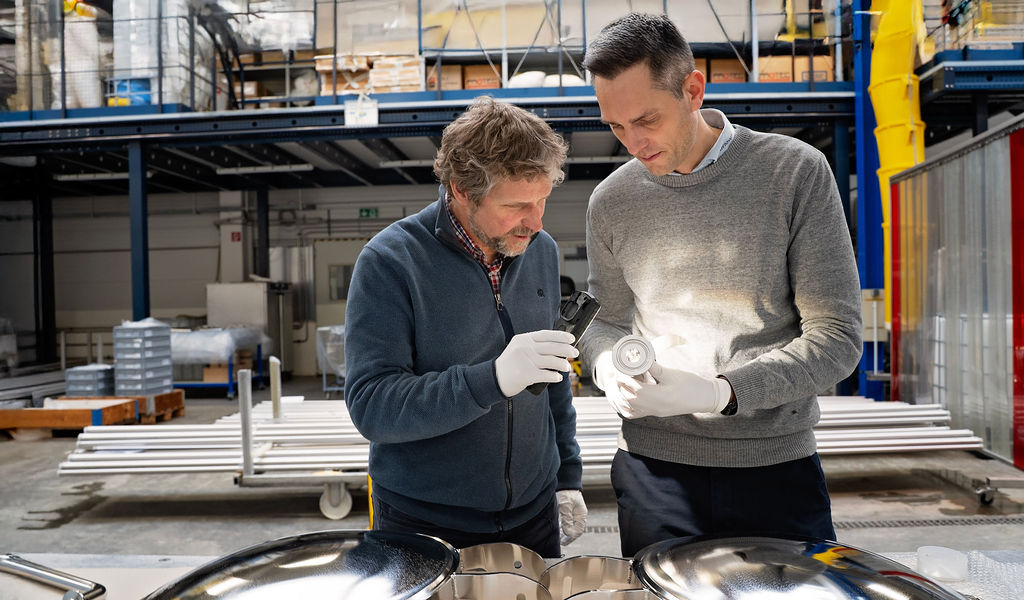
The most striking difference before and after electropolishing is seen in the uniformity of the surface. Welds appear smoother, the surface becomes more homogeneous, and potential collection points for impurities are significantly reduced.
In the pharmaceutical industry, it is crucial that improvements can not only be seen, but also documented. Surface roughness, process parameters, and certifications are therefore an integral part of the delivery and a central element in subsequent quality assurance.
Documentation as part of the process – not an add-on
For pharmaceutical clients, documentation is not an option. It is a prerequisite.
For specialists such as Henkel, documentation and certification are integral to the electropolishing process itself. This means that process control and traceability are an integral part of the work, and that the documentation supports both the Factory Acceptance Test (FAT) and subsequent validation.
It is precisely this link between process and documentation that makes electropolishing applicable in pharmaceutical environments.
FAT-testing: When quality must be confirmed before the next step
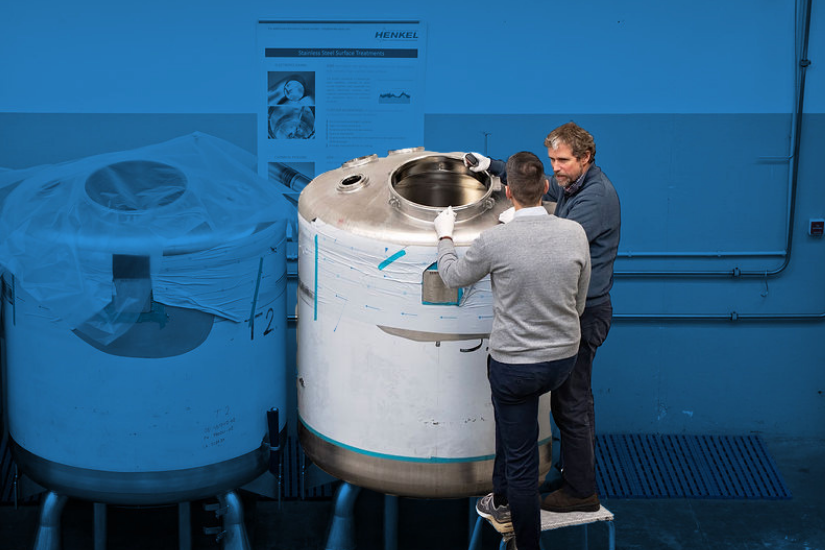
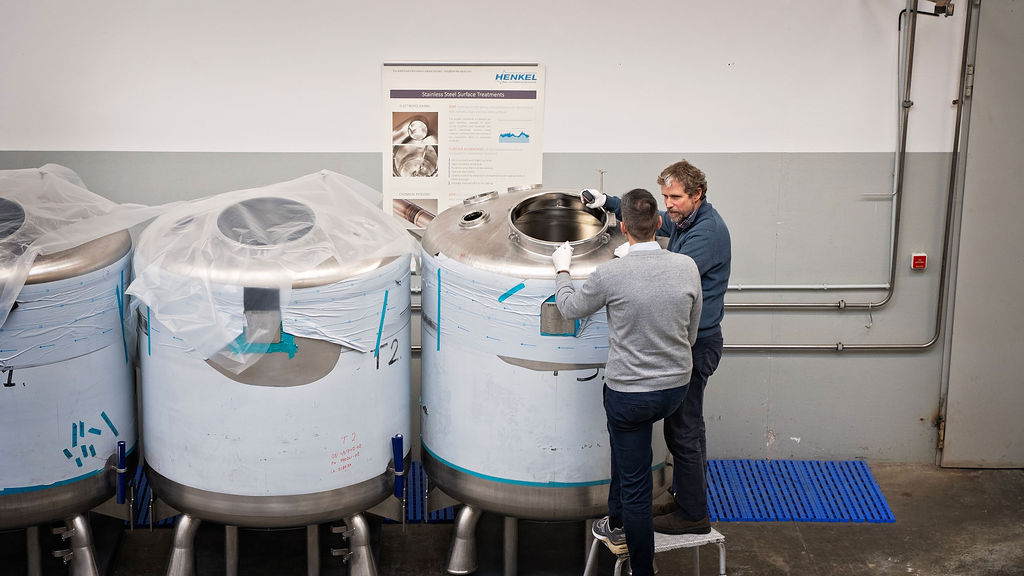
In projects with high demands, the Factory Acceptance Test (FAT) plays a crucial role. The FAT is the point where the solution, documentation, and requirements are verified before the equipment moves further along the value chain.
The FAT test creates peace of mind for all parties involved. Here it is ensured that:
- Surface requirements are met
- The documentation is complete and coherent
- A homogeneous and uniform surface has been achieved
- so that there are no loose ends that could later become critical
Alflow's role: To make claims clear and solutions applicable
When the end customer operates in a pharmaceutical environment, there are often many stakeholders and high expectations for both technology and documentation.
Alflow's role in these types of projects is to act as a quality lead between requirements and the solution. We ensure coherence between:
- customer requirements
- the technical solution
- documentation from suppliers and collaboration partners
By being close to the process – also physically – we can vouch for the quality. This reduces risk and builds trust in projects where there is no room for assumptions.
Electropolishing as part of the whole
In pharmaceutical environments, electropolishing is rarely an isolated choice. It is part of an overall quality approach where the surface, documentation, and FAT test collectively reduce risk and build confidence in operation and validation.
When technology, documentation and collaboration go hand in hand, electropolishing becomes not just a process – but part of a flow that supports stable and safe production.
Want to hear more?